

The Hall of Religion & Spirituality explores one of humanity’s most enduring pursuits: the search for meaning, transcendence, and connection with the sacred.
Across cultures and centuries, people have created religions, rituals, devotional practices, sacred texts, institutions, symbols, and objects through which they have sought to understand existence and their place within it. This hall examines those expressions as artifacts of human experience and cultural history.
From established religious traditions and devotional practices to reform movements, new religious movements, theological debates, and the material culture of faith, the collection reveals how belief has shaped communities, identities, institutions, and individual lives.
Explore books, artifacts, devotional objects, historical materials, and other curiosities that illuminate how human beings have understood the sacred—and how those understandings have shaped the world.
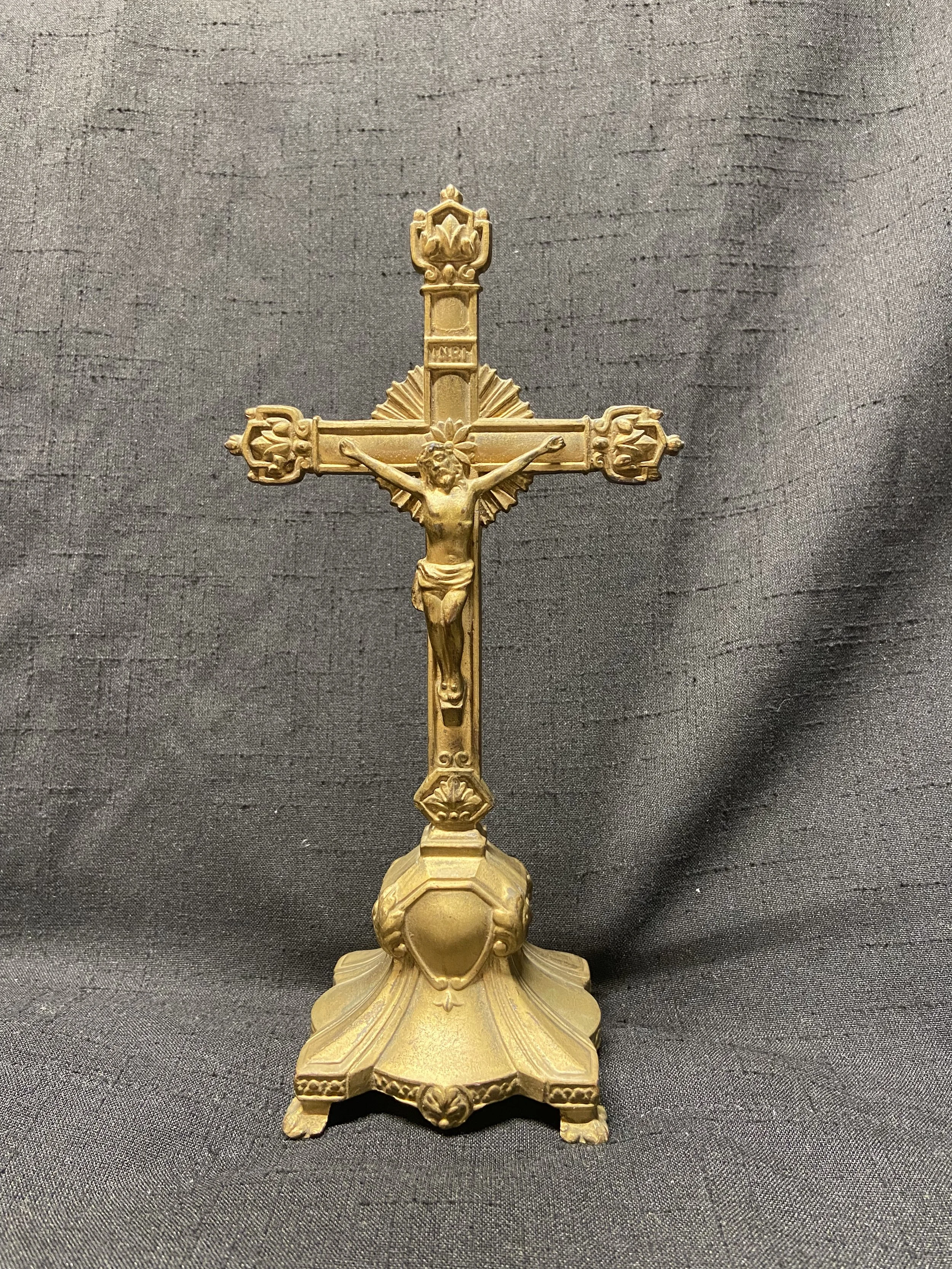
The crucifix is constructed of cast zinc alloy (spelter) with an aged brass/gilt-colored finish. Wear to the underside reveals the silvery-gray base metal. The piece is non-magnetic and weighs approximately 14.3 oz (405 g). Its elaborate casting and substantial form reflect the tradition of devotional objects designed not merely for display, but to occupy a meaningful place within the home, chapel, or personal altar. Standing crucifixes have long served as physical expressions of faith, sacrifice, redemption, protection, and spiritual presence. Beyond their formal religious function, such objects become part of the material culture of belief—objects held, displayed, inherited, and incorporated into the intimate spaces of everyday religious life. Period: Early 20th century, attributed Origin: European-style devotional object; specific origin unconfirmed Dimensions: Approx. 7.75–8 in. tall × 4.25 in. wide × 2.25 in. deep Collection: Hall of Religion & Spirituality Classification: Religious & Devotional Objects • Christian Material Culture • Religious
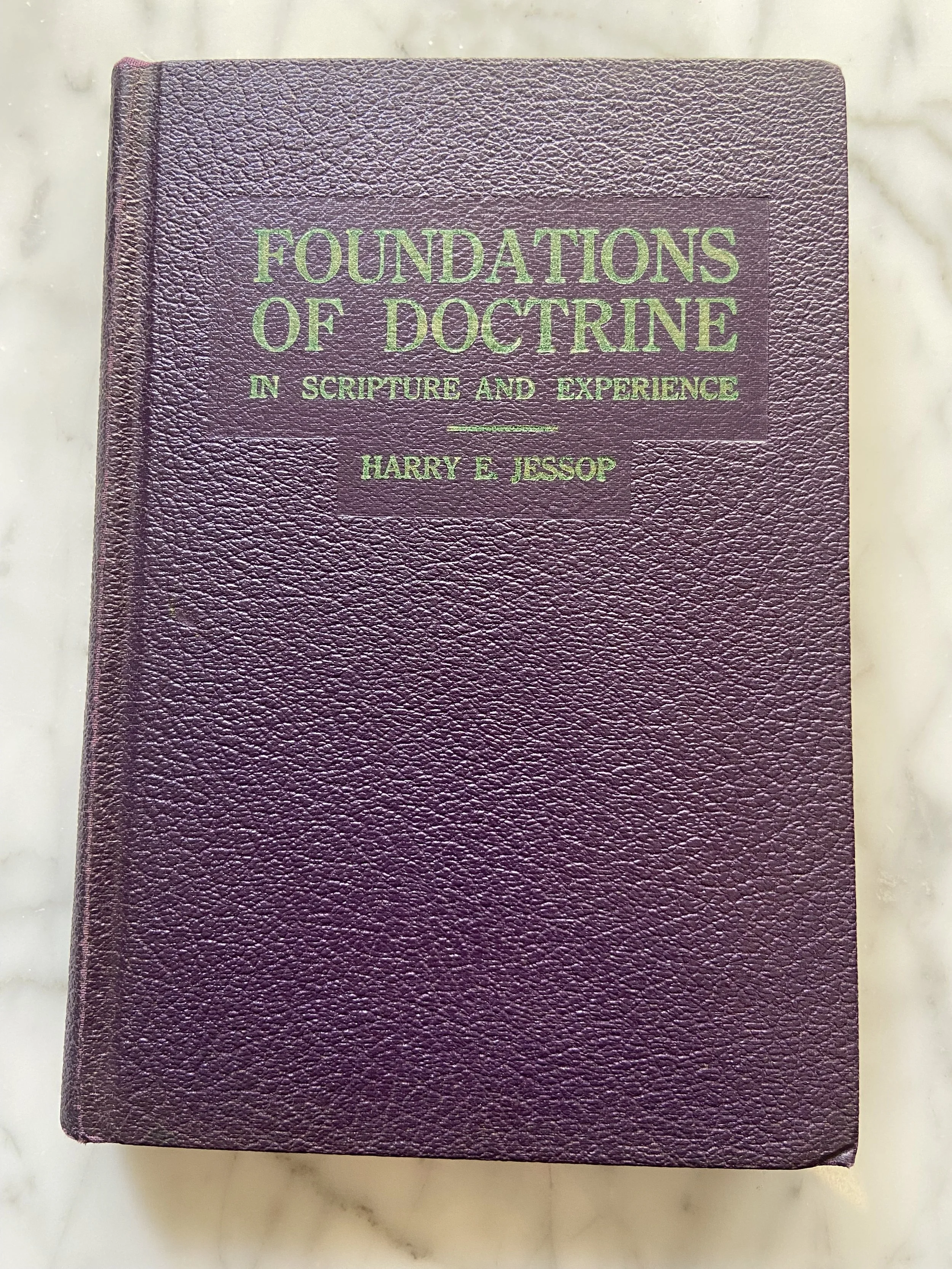
A fascinating example of mid-20th-century American evangelical theology, Foundations of Doctrine in Scripture and Experience was written by Harry E. Jessop, a prominent figure associated with the holiness and evangelical traditions. Originally published in 1938, this 1954 eighth printing reflects the continuing circulation and influence of Jessop’s attempt to articulate Christian doctrine through the combined lenses of Scripture and lived religious experience.