Japan | c. 1960s–1970s
Collection
Scientific Instruments
Description
For centuries, microscopes have expanded humanity's understanding of the natural world by revealing organisms, cells, and structures invisible to the naked eye. By the mid-twentieth century, quality optical instruments like this Japanese-made Tasco microscope brought scientific discovery into classrooms, laboratories, and homes, inspiring generations of students to explore the hidden complexities of life.
Although this example is incomplete and displayed as a decorative artifact, it remains a tangible reminder of an era when scientific instruments became symbols of curiosity, education, and discovery.
Artifact Details
Manufacturer: Tasco
Country of Origin: Japan
Date: c. 1960s–1970s
Type: Compound Microscope
Materials: Painted metal, glass, brass, and plastic
Condition: Incomplete; offered as a decorative display piece.
Anthrofolklorist Notes
Objects like this transformed science from something practiced only by specialists into something that could be experienced by students and amateur naturalists. Even as a non-functional display piece, it represents humanity's enduring desire to observe what lies beyond ordinary sight.
Japan | c. 1960s–1970s
Collection
Scientific Instruments
Description
For centuries, microscopes have expanded humanity's understanding of the natural world by revealing organisms, cells, and structures invisible to the naked eye. By the mid-twentieth century, quality optical instruments like this Japanese-made Tasco microscope brought scientific discovery into classrooms, laboratories, and homes, inspiring generations of students to explore the hidden complexities of life.
Although this example is incomplete and displayed as a decorative artifact, it remains a tangible reminder of an era when scientific instruments became symbols of curiosity, education, and discovery.
Artifact Details
Manufacturer: Tasco
Country of Origin: Japan
Date: c. 1960s–1970s
Type: Compound Microscope
Materials: Painted metal, glass, brass, and plastic
Condition: Incomplete; offered as a decorative display piece.
Anthrofolklorist Notes
Objects like this transformed science from something practiced only by specialists into something that could be experienced by students and amateur naturalists. Even as a non-functional display piece, it represents humanity's enduring desire to observe what lies beyond ordinary sight.

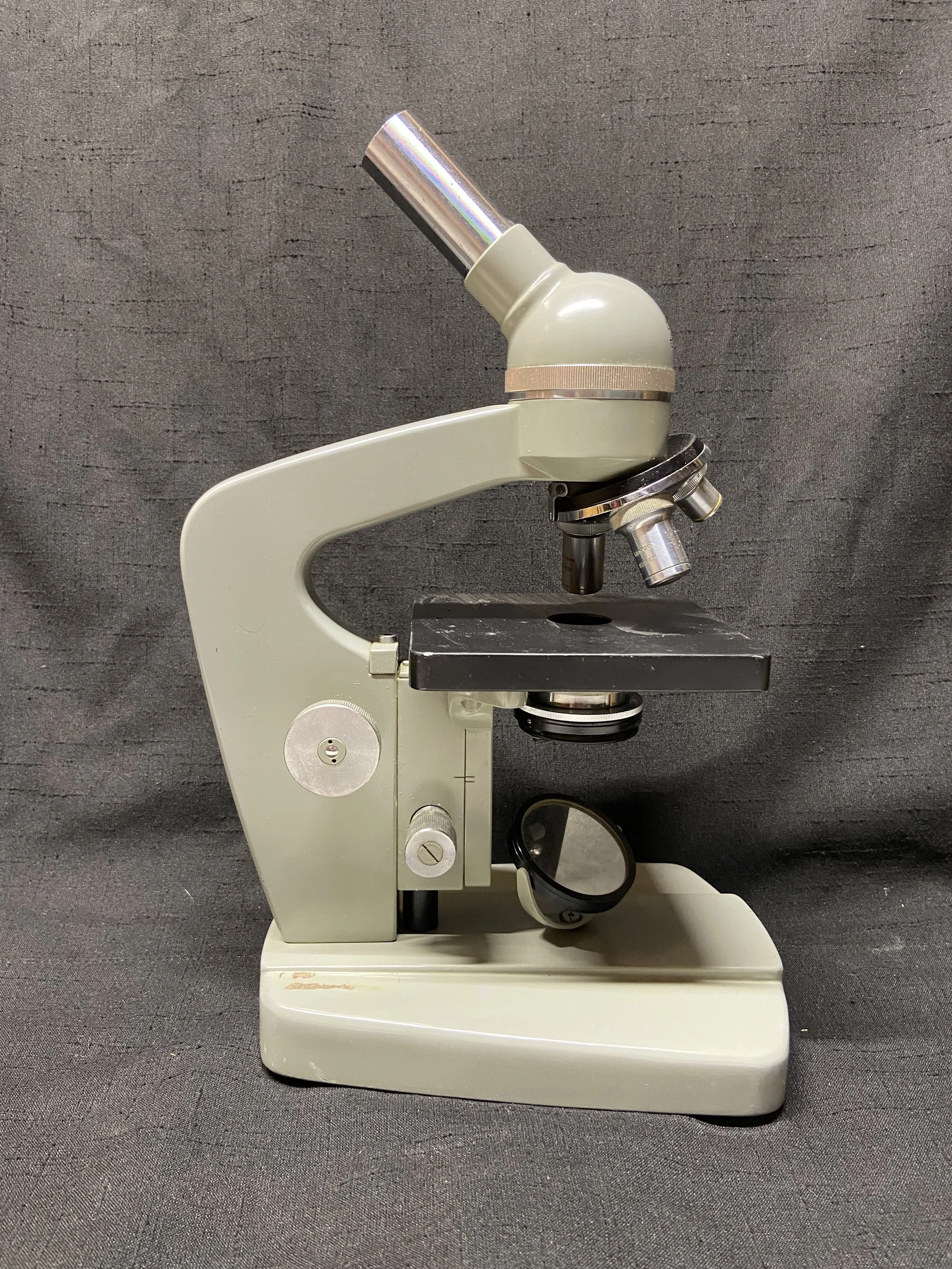 Image 1 of 6
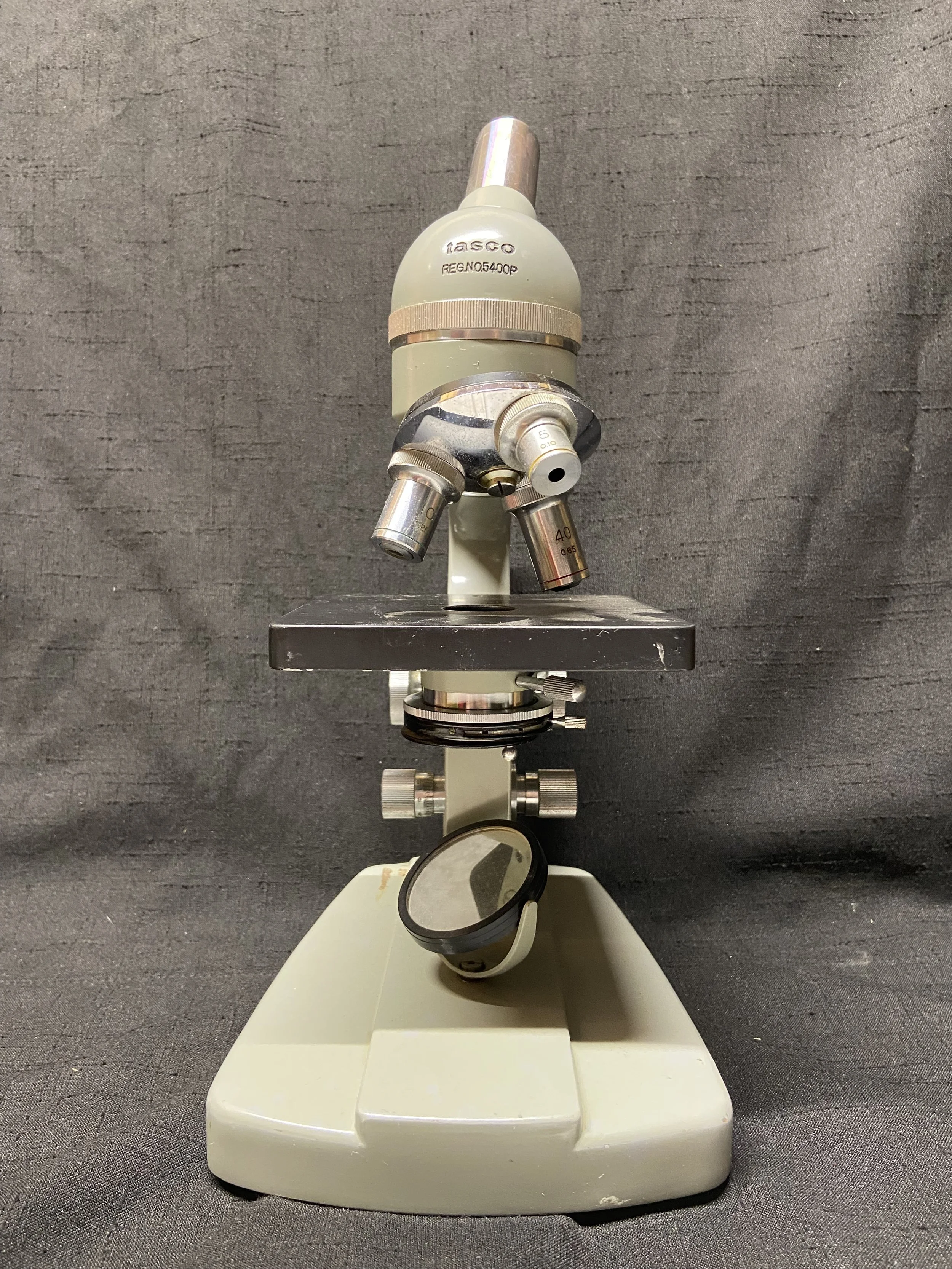 Image 2 of 6
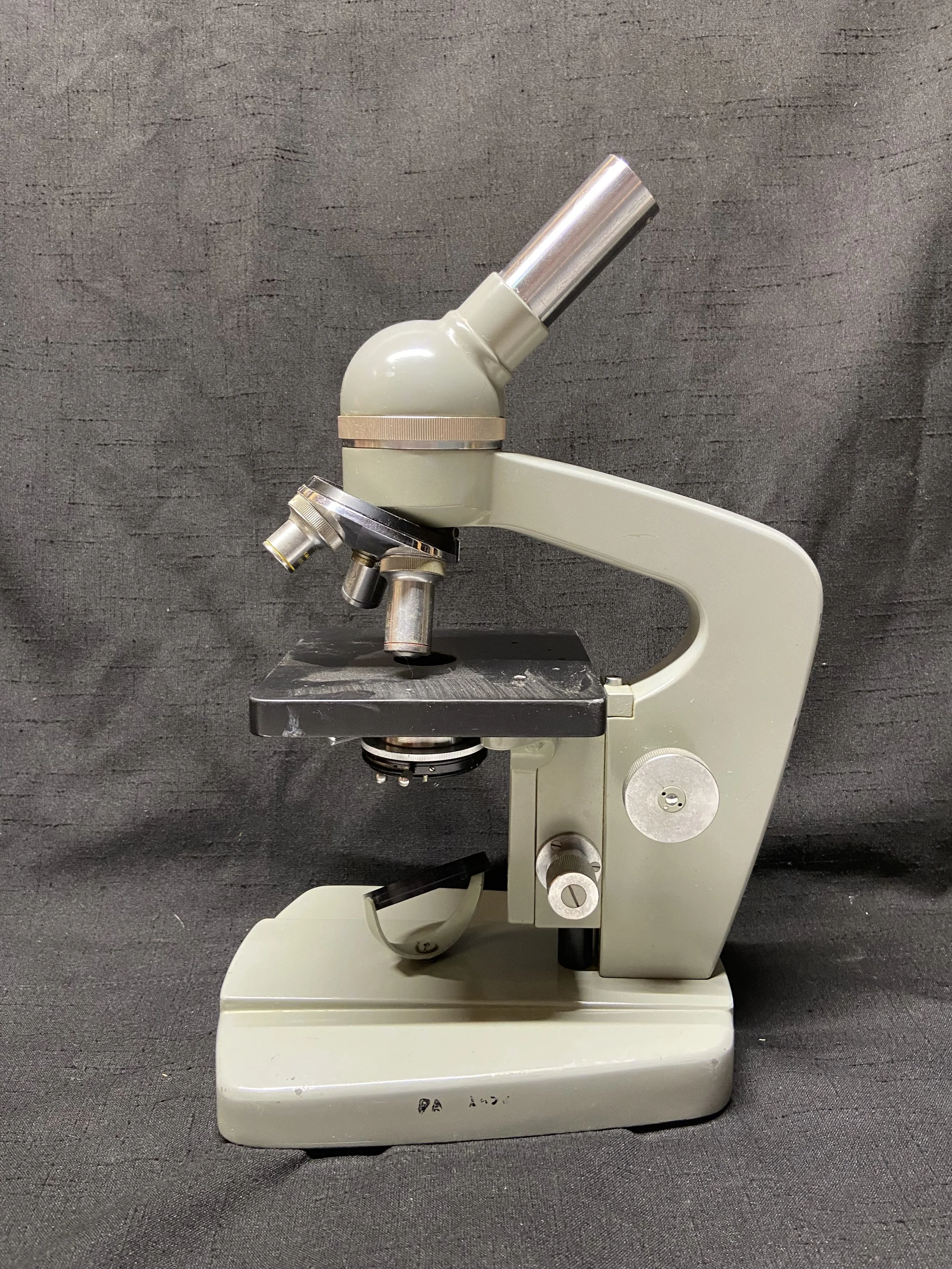 Image 3 of 6
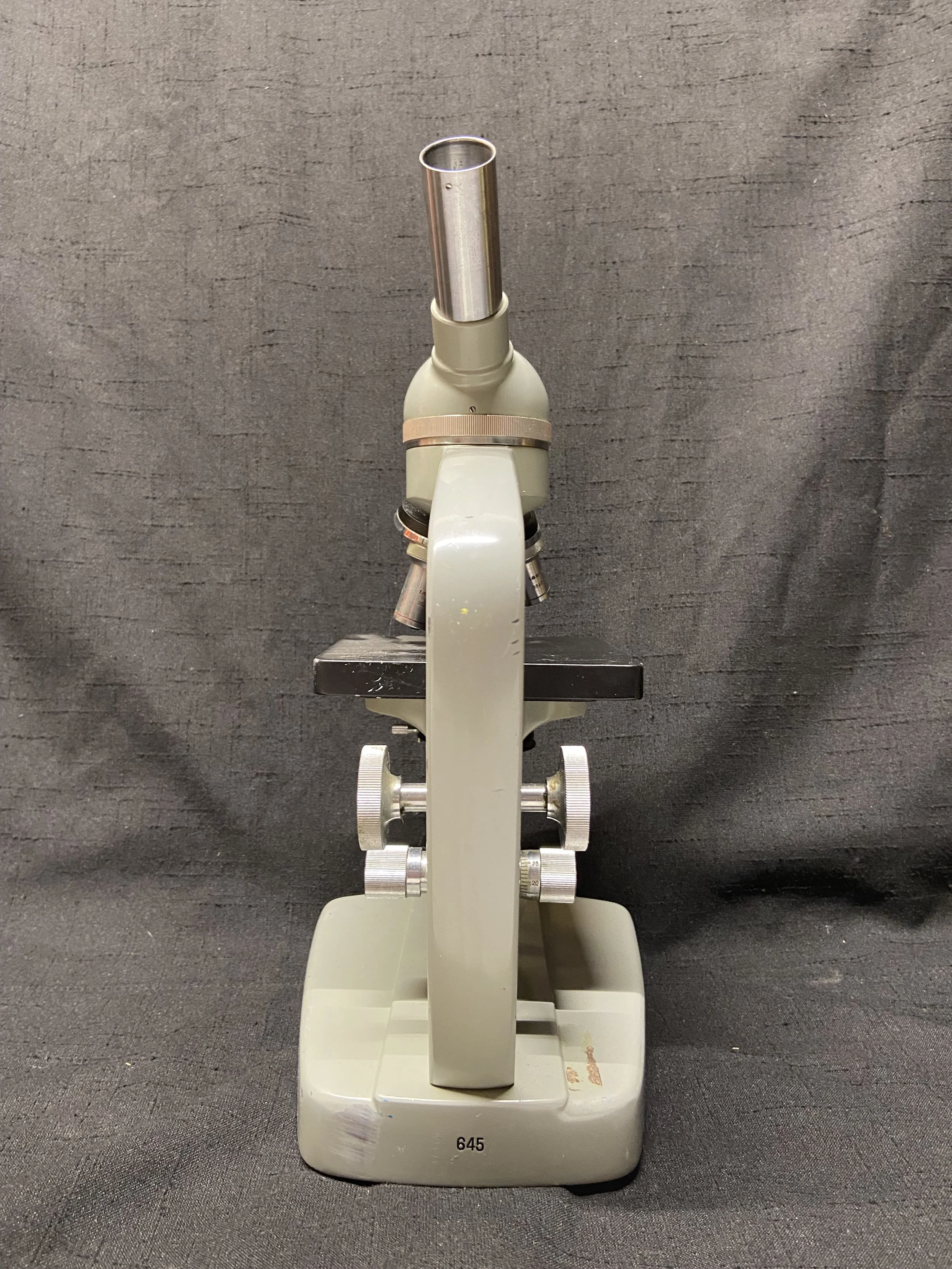 Image 4 of 6
 Image 5 of 6
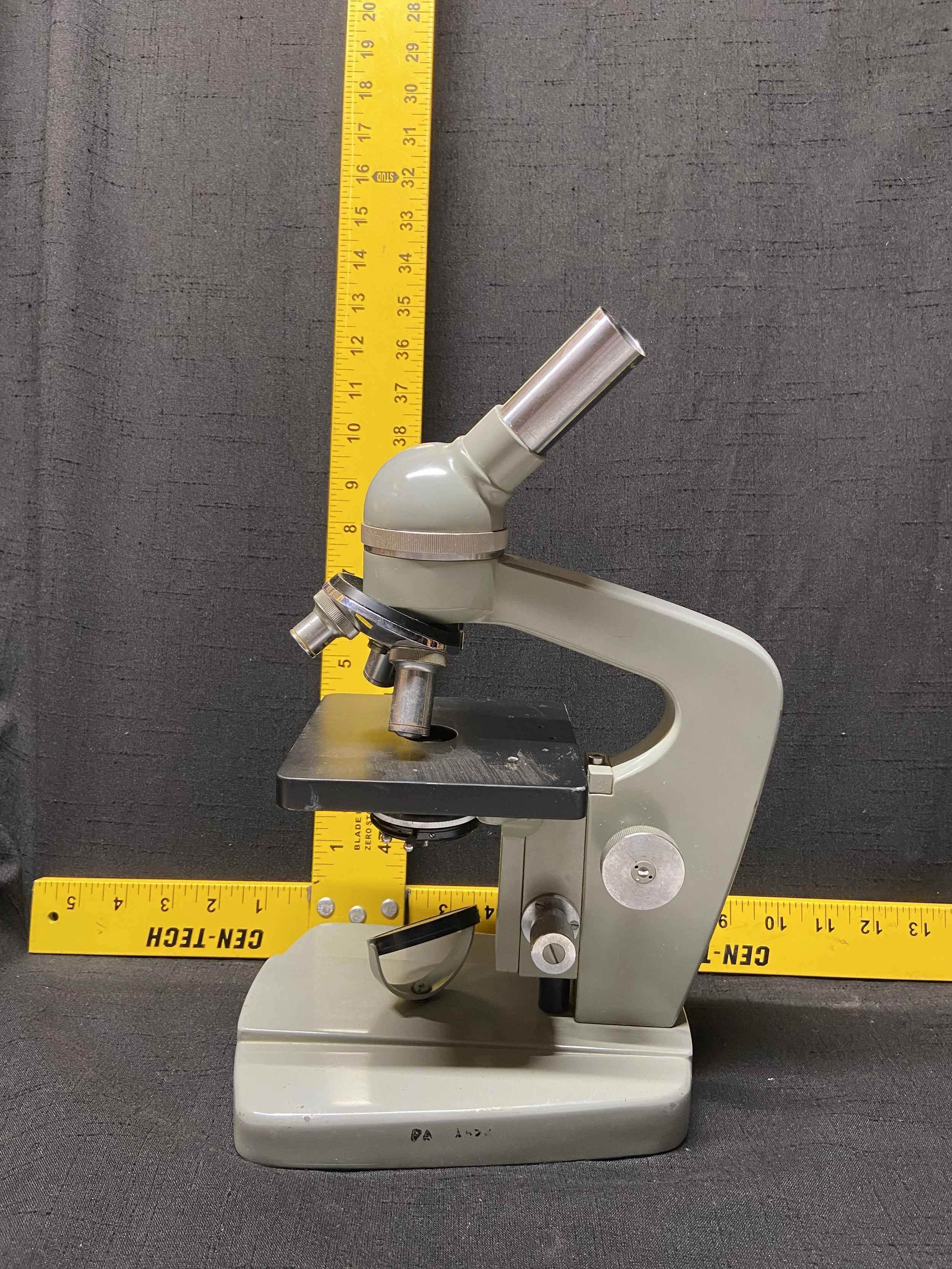 Image 6 of 6