
 Image 1 of 3
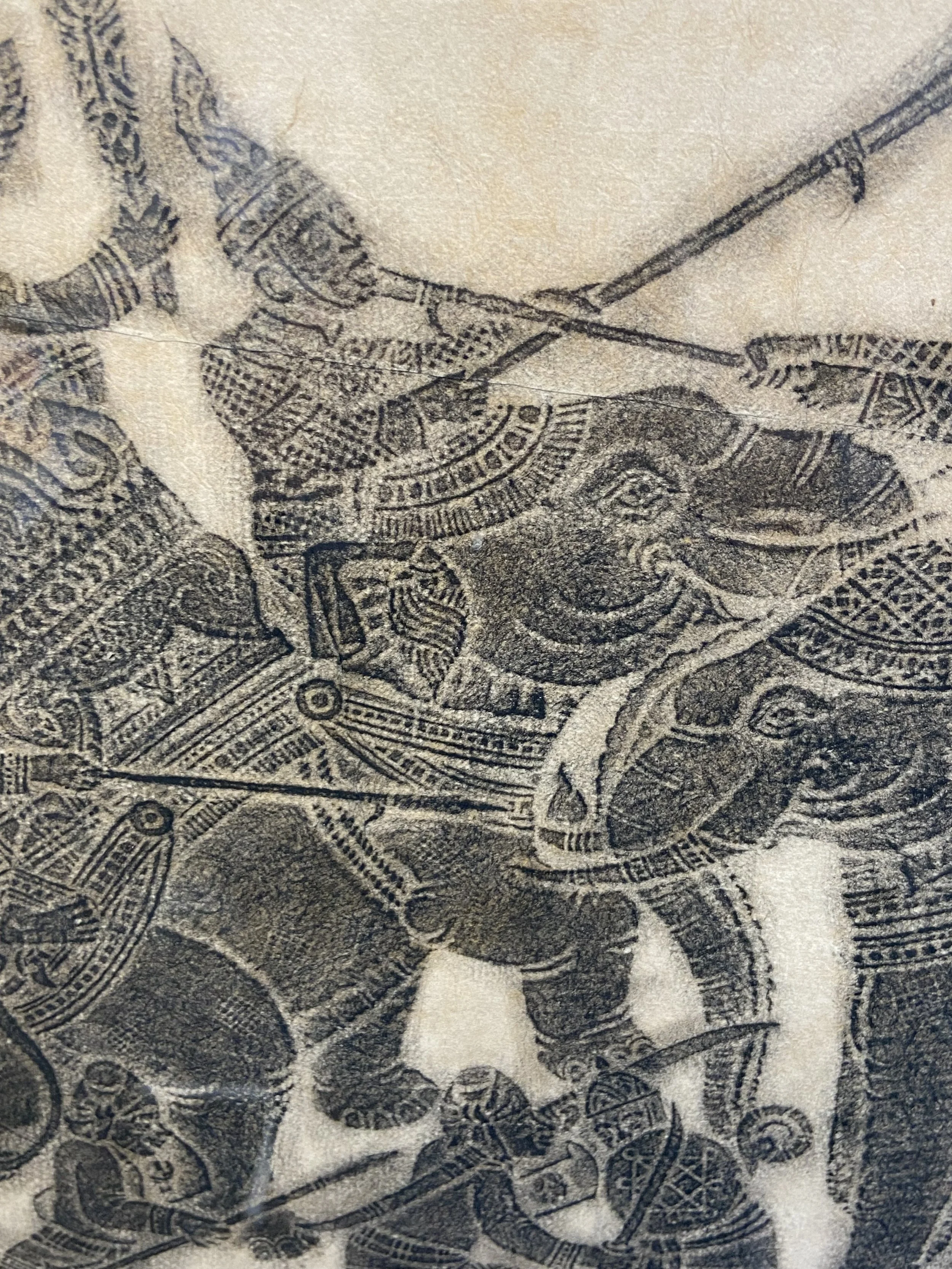 Image 2 of 3
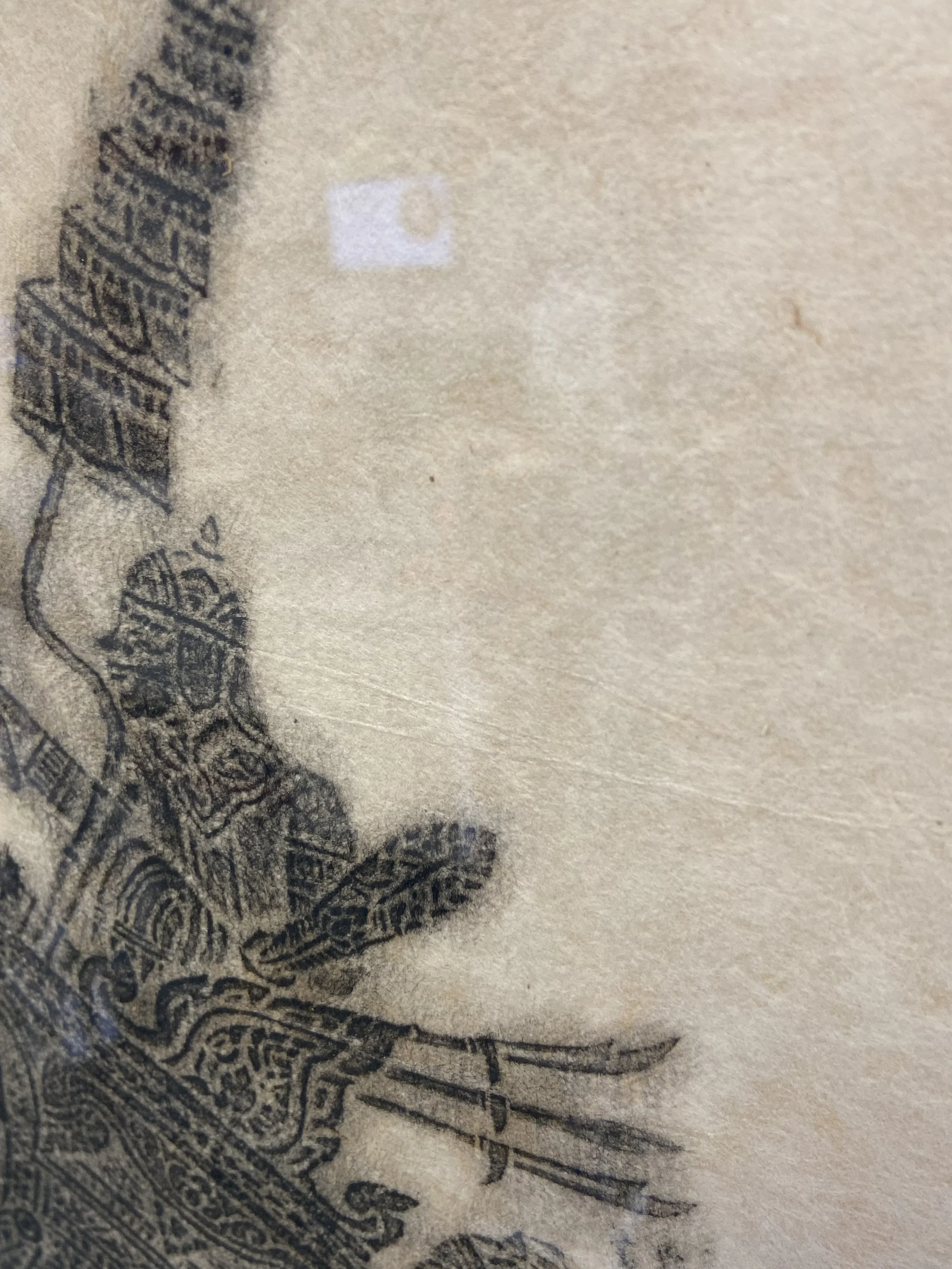 Image 3 of 3
Description
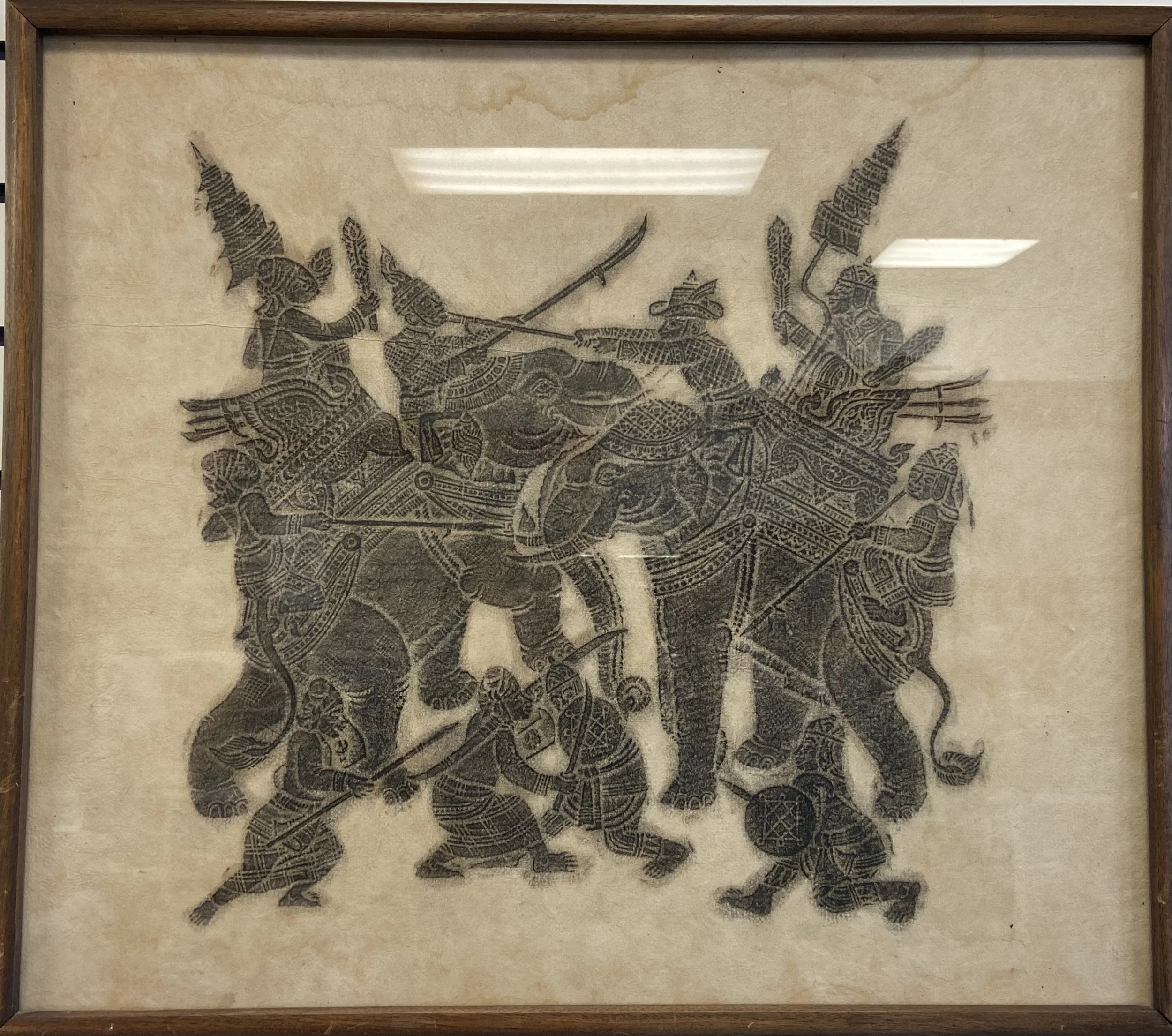
This striking vintage Thai temple rubbing features warriors mounted on elephants, dramatically captured in motion. The artwork was likely created on traditional rice paper using charcoal, a method historically used to preserve intricate temple carvings through hand-rendered impressions.
Temple rubbings such as this were especially popular among travelers and collectors during the 1960s, when artisans would gently press rice paper over carved stone reliefs and apply charcoal to reveal the detailed imagery beneath. Each piece carries subtle variations, giving it a unique, hand-crafted character.
The scene depicted is believed to be from the Ramakien, Thailand’s national epic derived from the Indian Ramayana. Elephant-mounted warriors frequently appear in these narratives, symbolizing royal power, valor, and divine conflict.
Historical Context
During the mid-20th century, temple rubbings became a popular cultural art form. However, the repeated friction from the rubbing process gradually contributed to erosion of ancient stone carvings. To preserve Thailand’s sacred heritage sites, the Thai government eventually banned the practice of making rubbings at major temples.
As a result, authentic vintage rubbings from this era are increasingly collectible and represent a discontinued artistic tradition.
Details
• Origin: Thailand
• Era: Circa 1960s
• Medium: Charcoal on rice paper
• Subject: Warriors on elephants (Ramakien epic scene)
• Style: Temple relief rubbing
• Condition: Vintage (natural age-related character consistent with age)
Why It’s Special
• Authentic mid-century cultural artifact
• Depicts legendary epic imagery from Thailand’s national story
• Hand-crafted using a now-restricted artistic process
• Ideal for collectors of Southeast Asian art or epic mythological themes
• Distinctive statement piece for home, office, or gallery display
Sales Price
$150.00
An evocative piece of Thai cultural history — preserving the spirit of ancient temple carvings in a form that can still be appreciated today.
Description
This striking vintage Thai temple rubbing features warriors mounted on elephants, dramatically captured in motion. The artwork was likely created on traditional rice paper using charcoal, a method historically used to preserve intricate temple carvings through hand-rendered impressions.
Temple rubbings such as this were especially popular among travelers and collectors during the 1960s, when artisans would gently press rice paper over carved stone reliefs and apply charcoal to reveal the detailed imagery beneath. Each piece carries subtle variations, giving it a unique, hand-crafted character.
The scene depicted is believed to be from the Ramakien, Thailand’s national epic derived from the Indian Ramayana. Elephant-mounted warriors frequently appear in these narratives, symbolizing royal power, valor, and divine conflict.
Historical Context
During the mid-20th century, temple rubbings became a popular cultural art form. However, the repeated friction from the rubbing process gradually contributed to erosion of ancient stone carvings. To preserve Thailand’s sacred heritage sites, the Thai government eventually banned the practice of making rubbings at major temples.
As a result, authentic vintage rubbings from this era are increasingly collectible and represent a discontinued artistic tradition.
Details
• Origin: Thailand
• Era: Circa 1960s
• Medium: Charcoal on rice paper
• Subject: Warriors on elephants (Ramakien epic scene)
• Style: Temple relief rubbing
• Condition: Vintage (natural age-related character consistent with age)
Why It’s Special
• Authentic mid-century cultural artifact
• Depicts legendary epic imagery from Thailand’s national story
• Hand-crafted using a now-restricted artistic process
• Ideal for collectors of Southeast Asian art or epic mythological themes
• Distinctive statement piece for home, office, or gallery display
Sales Price
$150.00
An evocative piece of Thai cultural history — preserving the spirit of ancient temple carvings in a form that can still be appreciated today.