Sale Price:
$62.99
Original Price:
$69.99
An unusual and historically fascinating early work exploring physiological psychology, mental suggestion, character formation, hypnotism, self-control, and the relationship between mind and behavior.
Newton N. Riddell
Child Culture According to the Laws of Physiological Psychology and Mental Suggestion
Chicago: Child of Light Publishing Co., 1902.
This is an original 1902 hardcover, not a modern reprint.
What makes this particular book especially interesting is the author's own description of his work. The title page identifies Riddell as a lecturer on:
Heredity
Physiological Psychology
Psychic Phenomena
Inspiration
Brain Building
Soul Growth
The book contains an especially unusual section, Part III: "Character Building by Suggestion." Among its chapters are:
"Suggestion" Defined
The Duality of Mind
The Law of Suggestion
Prefixing the Character
Secret of Self-Control
A Practical Experiment
Lodging a Suggestion
In the chapter "Lodging a Suggestion," Riddell discusses the conditions he believed necessary for successfully implanting a suggestion, including a clearly defined concept, a receptive state in the recipient, and sympathy between the suggester and recipient.
The book also explicitly discusses hypnotism and mental suggestion, making it an interesting artifact from a period when psychology, self-culture, spiritual thought, and psychical ideas frequently overlapped. Riddell's book is also documented in contemporary bibliographic sources as a 1902 work.
Condition
Vintage/antique book with age-appropriate wear.
Original brown cloth hardcover with gilt decorative design.
Some fading/discoloration to the cloth.
Rubbing and wear to the corners and edges.
Spine shows wear.
Interior pages are generally intact.
Previous ownership/library markings and handwritten numbers are present.
Please examine all photographs carefully for condition details.
Please note: This is an antique 1902 book and is being sold as a collectible historical volume rather than as a modern reading copy.
An unusual and historically fascinating early work exploring physiological psychology, mental suggestion, character formation, hypnotism, self-control, and the relationship between mind and behavior.
Newton N. Riddell
Child Culture According to the Laws of Physiological Psychology and Mental Suggestion
Chicago: Child of Light Publishing Co., 1902.
This is an original 1902 hardcover, not a modern reprint.
What makes this particular book especially interesting is the author's own description of his work. The title page identifies Riddell as a lecturer on:
Heredity
Physiological Psychology
Psychic Phenomena
Inspiration
Brain Building
Soul Growth
The book contains an especially unusual section, Part III: "Character Building by Suggestion." Among its chapters are:
"Suggestion" Defined
The Duality of Mind
The Law of Suggestion
Prefixing the Character
Secret of Self-Control
A Practical Experiment
Lodging a Suggestion
In the chapter "Lodging a Suggestion," Riddell discusses the conditions he believed necessary for successfully implanting a suggestion, including a clearly defined concept, a receptive state in the recipient, and sympathy between the suggester and recipient.
The book also explicitly discusses hypnotism and mental suggestion, making it an interesting artifact from a period when psychology, self-culture, spiritual thought, and psychical ideas frequently overlapped. Riddell's book is also documented in contemporary bibliographic sources as a 1902 work.
Condition
Vintage/antique book with age-appropriate wear.
Original brown cloth hardcover with gilt decorative design.
Some fading/discoloration to the cloth.
Rubbing and wear to the corners and edges.
Spine shows wear.
Interior pages are generally intact.
Previous ownership/library markings and handwritten numbers are present.
Please examine all photographs carefully for condition details.
Please note: This is an antique 1902 book and is being sold as a collectible historical volume rather than as a modern reading copy.

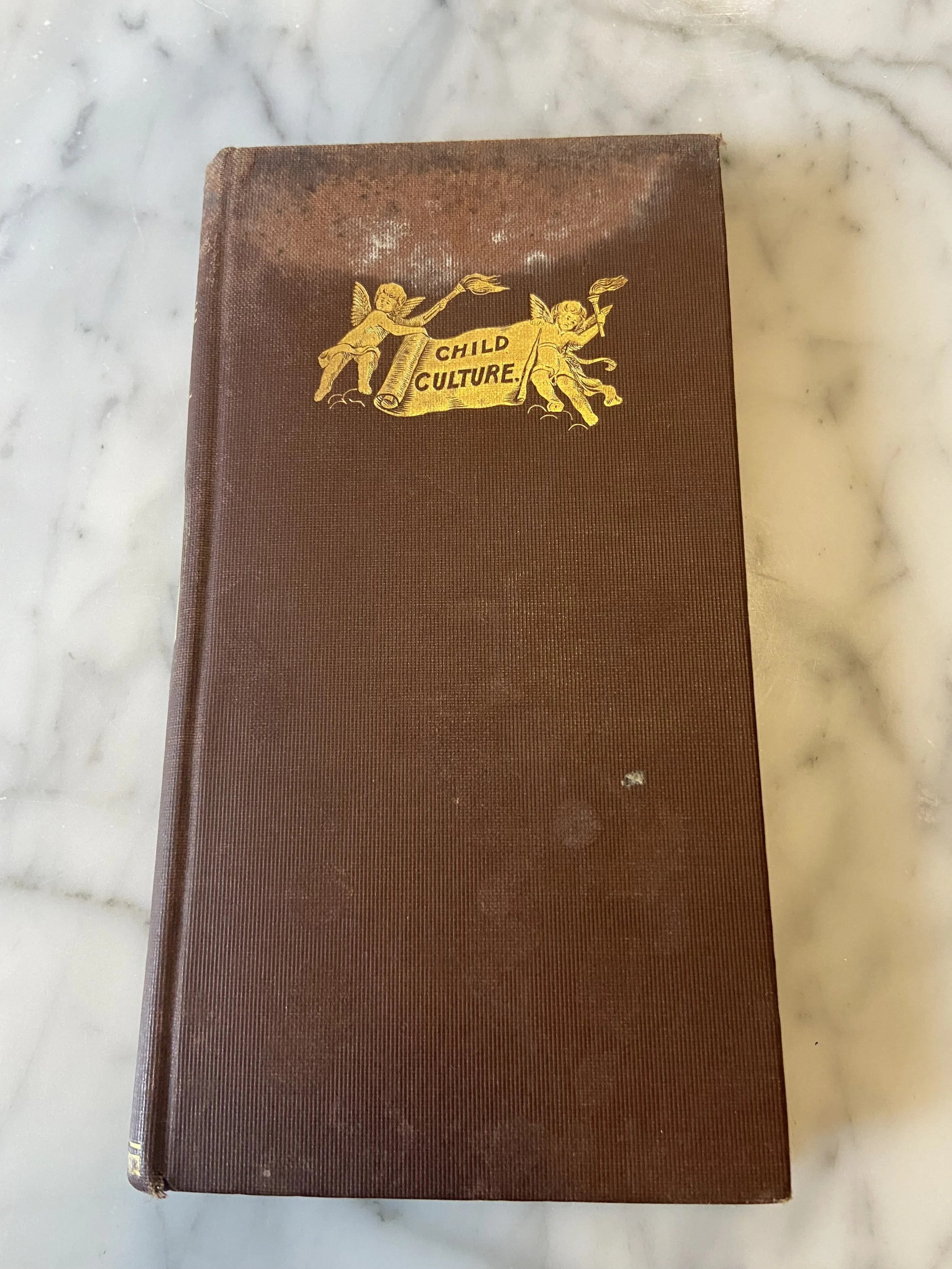 Image 1 of 7
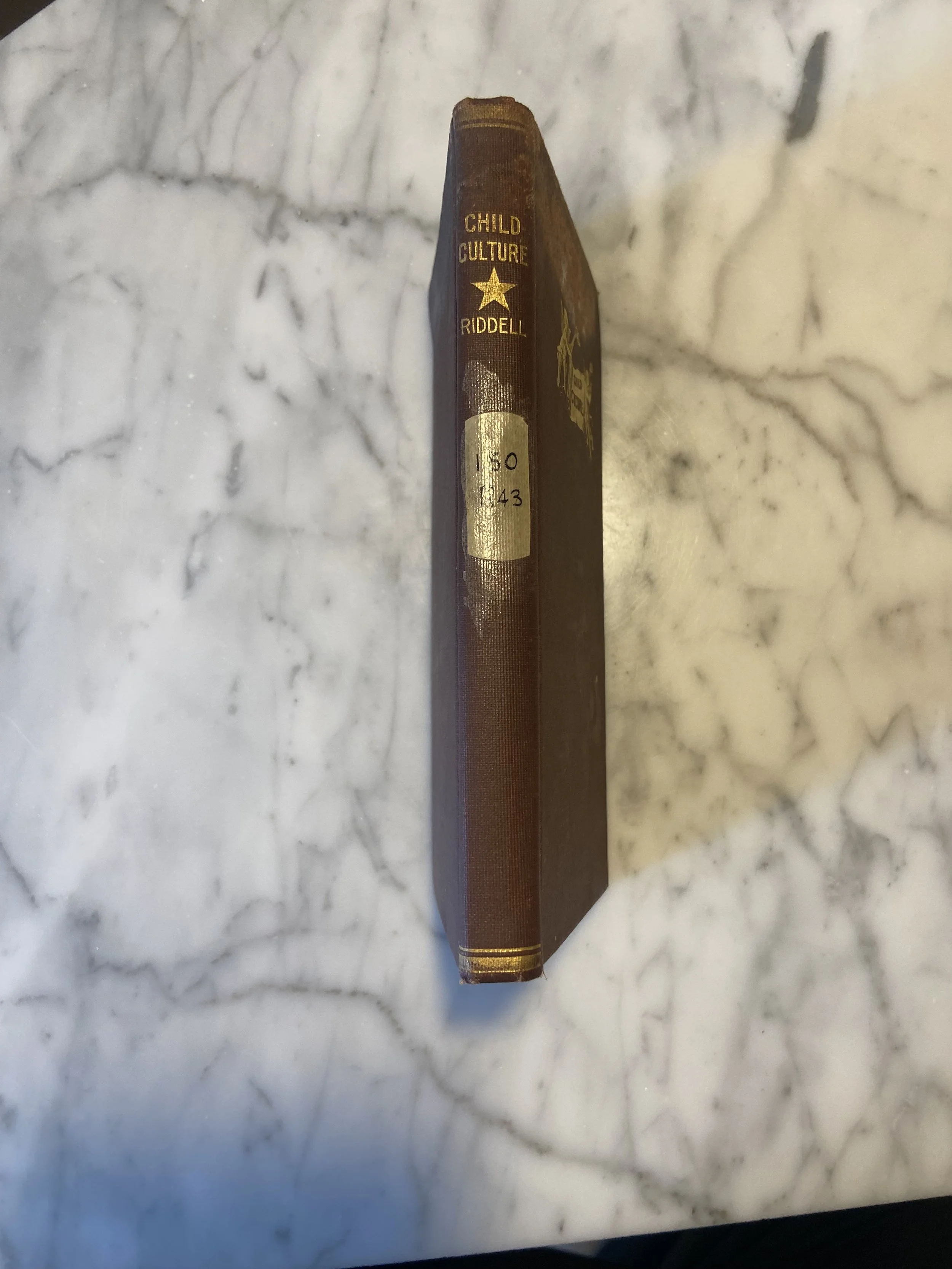 Image 2 of 7
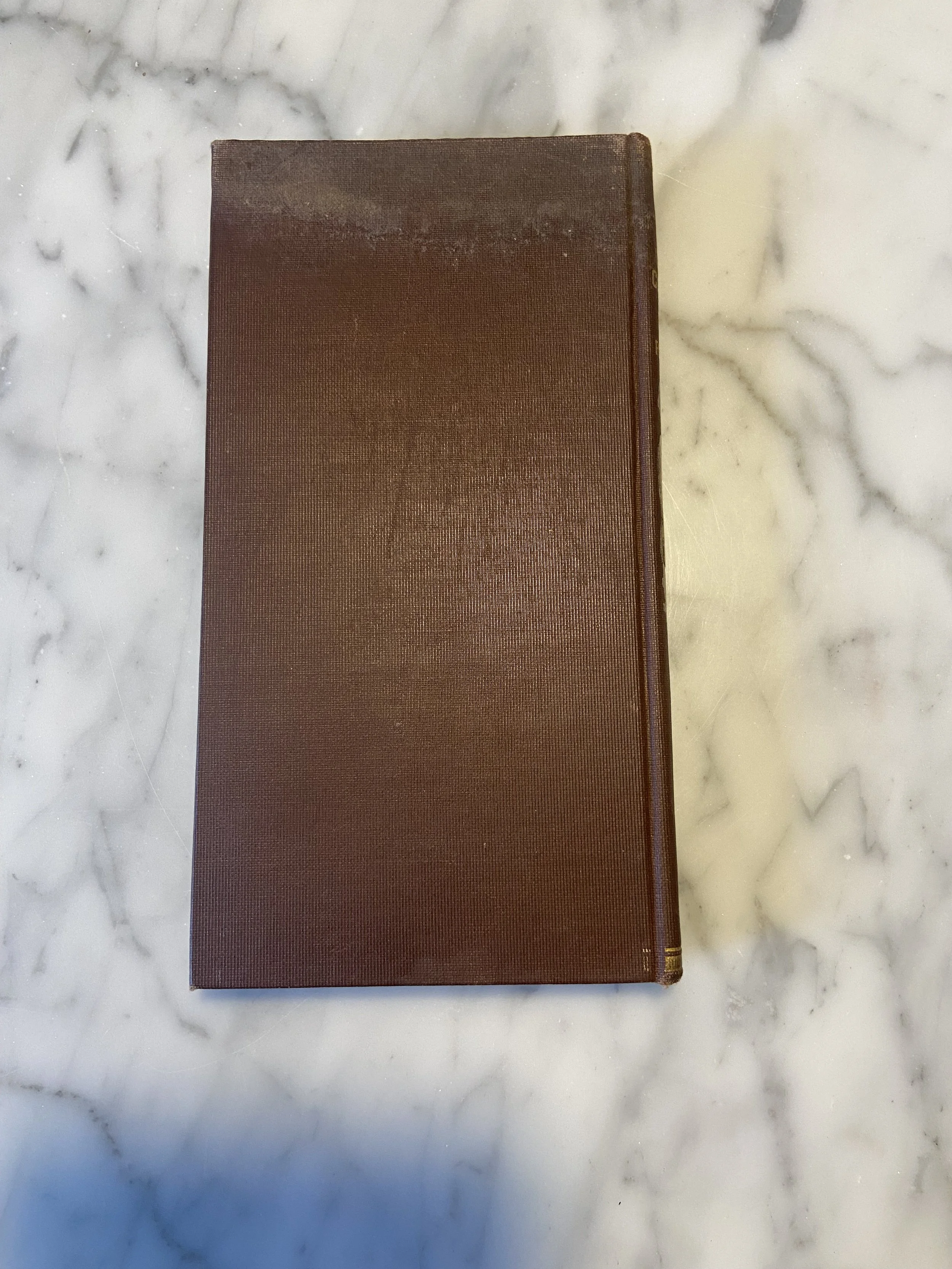 Image 3 of 7
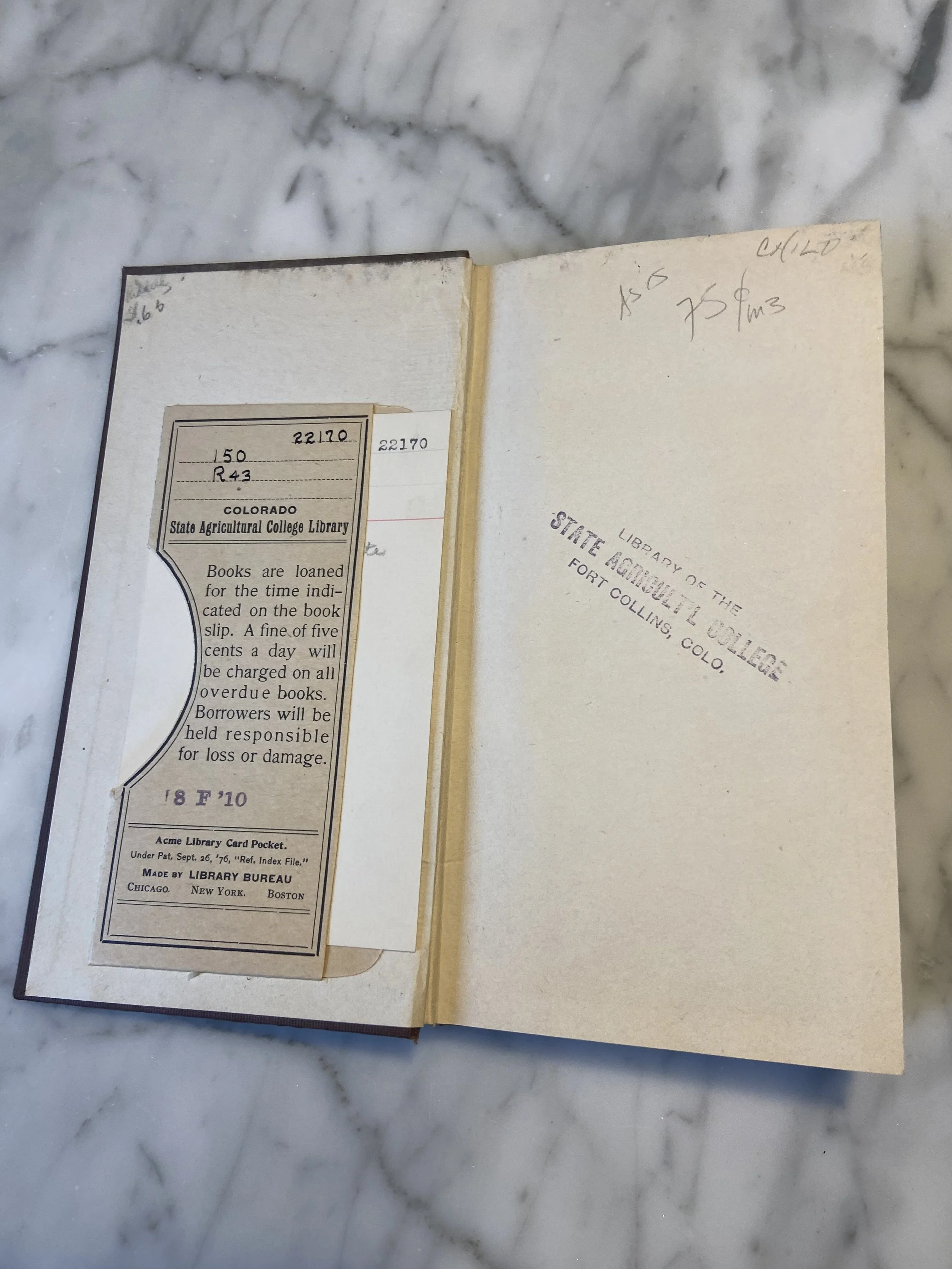 Image 4 of 7
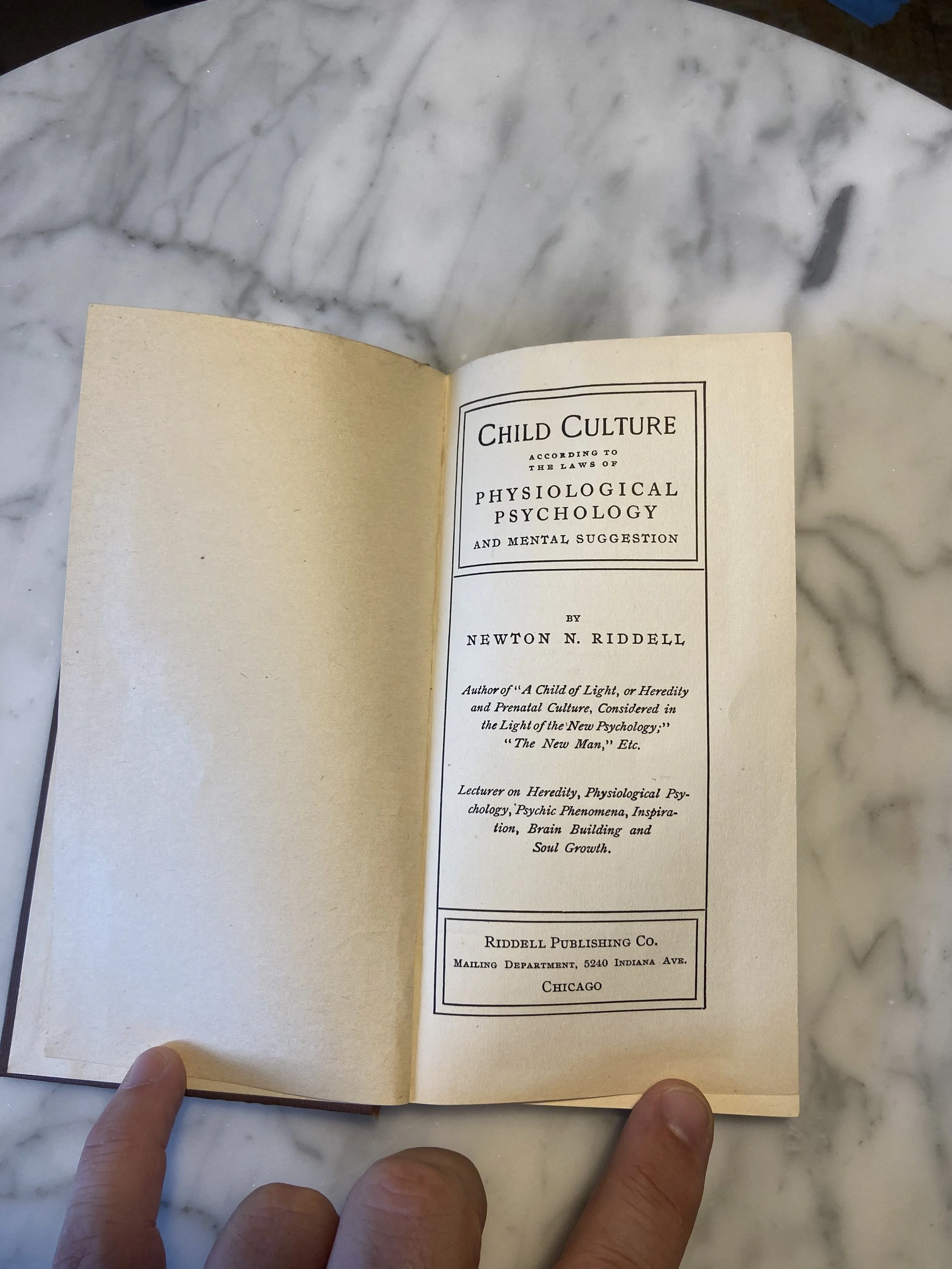 Image 5 of 7
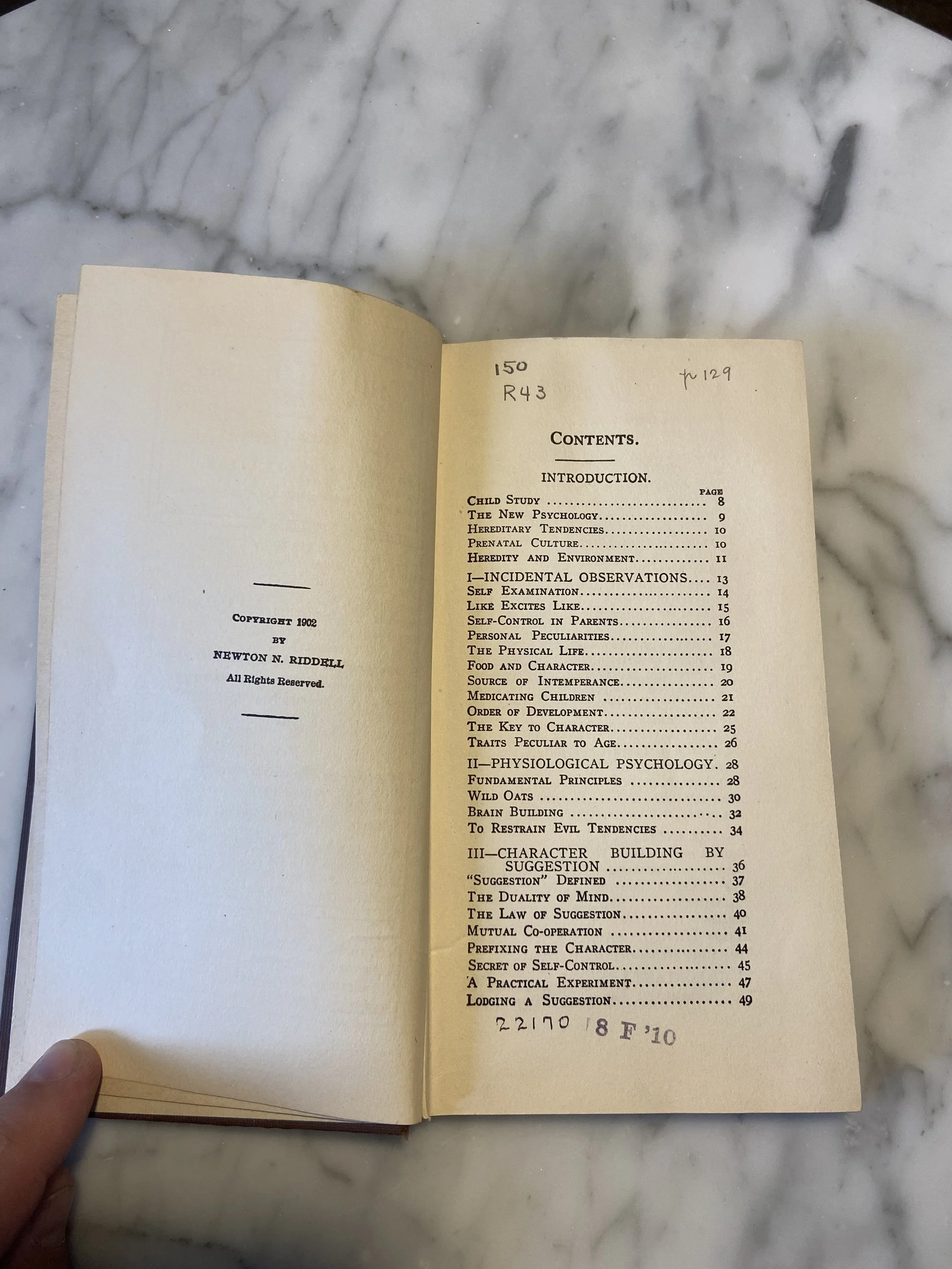 Image 6 of 7
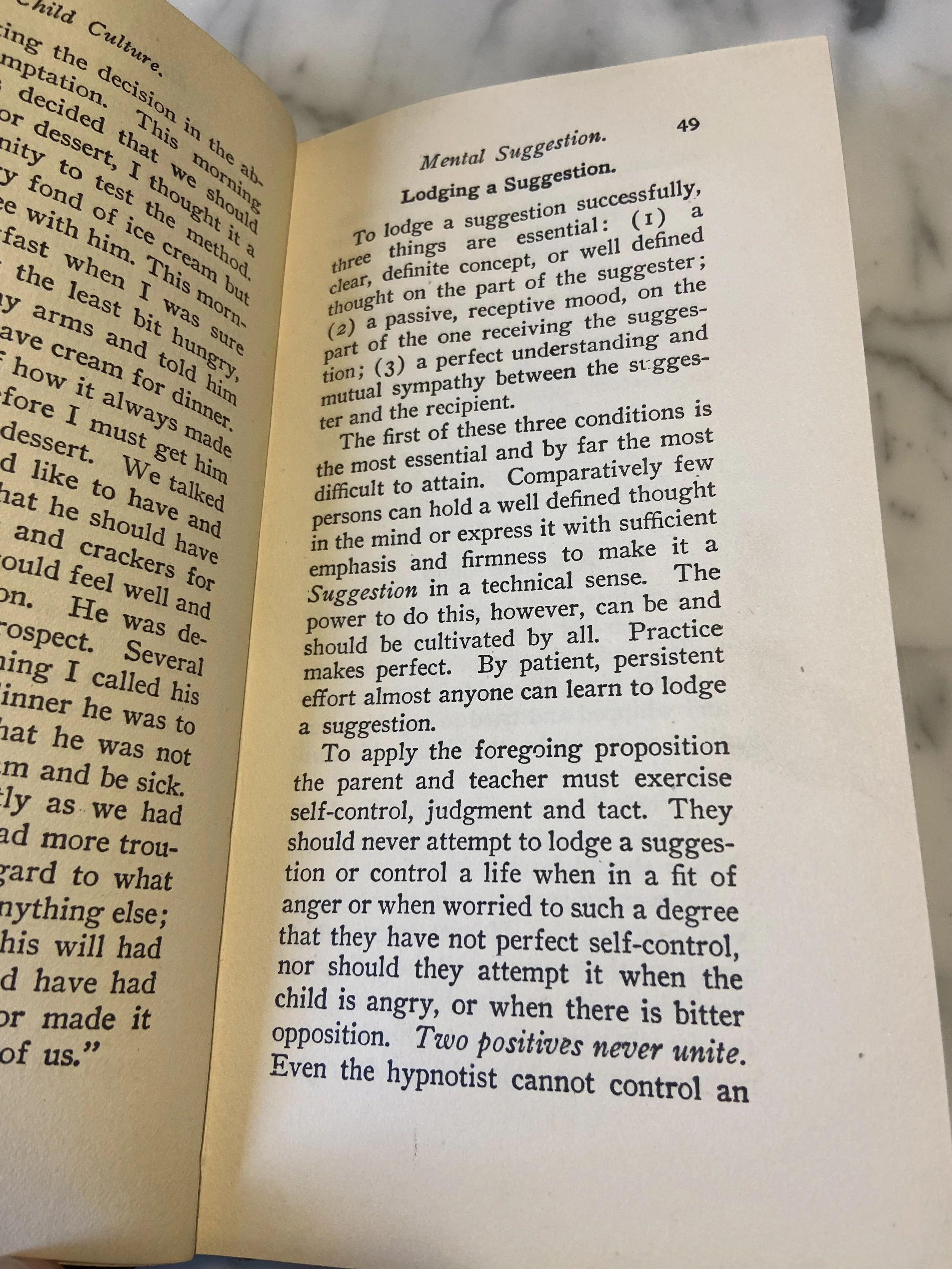 Image 7 of 7